Skip to content

Stay Current

The latest news, research, and conversations about menopause

Understanding Menopause

*-Menopause is a natural biological process that marks the end of your menstrual cycles. This guide provides certified information to help you navigate this transition with confidence and knowledge. Explore the common symptoms, effective treatments, and lifestyle adjustments you can make.

Perimenopause

The transitional period before menopause, where you may notice changes in your menstrual cycle, hot flashes, and other symptoms. It can last for several years.

Menopause

Clinically defined as occurring 12 months after your last menstrual period. At this stage, your ovaries have stopped releasing eggs and producing most of their estrogen.

Postmenopause

The years after menopause. During this stage, menopausal symptoms, such as hot flashes, may ease for many women. Health risks related to the loss of estrogen increase.

Source: National Institute on Aging (NIA)

Symptom Explorer

Menopause affects every woman differently. The most common symptoms are related to hormonal changes. Click the buttons to filter by category and select a symptom to learn more.

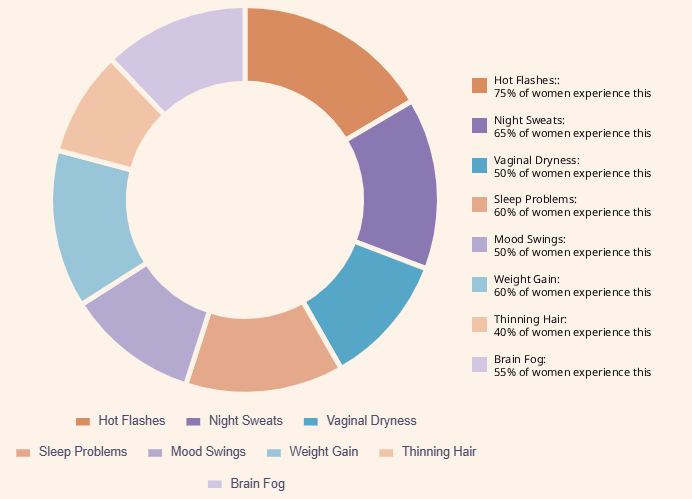
Prevalence of Common Symptoms

Hot Flashes

A sudden feeling of warmth in the upper body, which is usually most intense over the face, neck and chest. A flushed appearance and sweating can occur. Source: Mayo Clinic

Night Sweats

Feelings of irritability, anxiety, or sadness. Hormonal fluctuations can affect neurotransmitters in the brain that regulate mood. Source: Mayo Clinic

Vaginal Dryness

Reduced estrogen levels cause vaginal tissues to become thinner, drier, and less elastic, which can lead to discomfort during intercourse. Source: NAMS

Weight Gain

Metabolism often slows down around menopause, and fat distribution may shift to the abdomen. Source: National Institute on Aging

Thinning Hair

Hair may become thinner on the head, while more hair may appear on the face due to the changing ratio of estrogen to androgens. Source: NAMS

Sleep Problems

Hot flashes that occur at night, often disrupting sleep. They can be severe enough to require changing sheets or clothes. Source: NAMS

Mood Swings

Feelings of irritability, anxiety, or sadness. Hormonal fluctuations can affect neurotransmitters in the brain that regulate mood. Source: Mayo Clinic

Brain Fog

Difficulties with memory and concentration are common. Many women report feeling forgetful or having trouble focusing. Source: NAMS

Treatment Options

Managing symptoms is possible through various treatments. It’s crucial to discuss these options with your healthcare provider to find what’s right for you

Hormone Replacement Therapy (HRT)

HRT is the most effective treatment for relieving menopausal symptoms like hot flashes and vaginal dryness. It involves taking estrogen and, for women who still have a uterus, progestin.

  • Benefits: Effectively manages moderate to severe symptoms, helps prevent bone loss (osteoporosis).
  • Risks: May increase the risk of certain conditions like blood clots and breast cancer in some women. The risks depend on the type, dose, duration, and your personal health history.
  • Forms: Available as pills, patches, gels, creams, and rings.

Source: Mayo Clinic

Non-Hormonal Prescription Medications

For women who cannot or prefer not to use hormone therapy, several non-hormonal options are available.

  • Low-dose antidepressants: Certain SSRIs and SNRIs can be effective in reducing hot flashes.
  • Gabapentin: A medication for seizures that can also help reduce hot flashes, especially at night.
  • Clonidine: A blood pressure medication that may provide some relief from hot flashes.

Source: The North American Menopause Society (NAMS)

Lifestyle and Alternative Therapies

Many women find relief through lifestyle changes and complementary health approaches. Their effectiveness can vary.

  • Cognitive Behavioral Therapy (CBT): A type of talk therapy that can help manage hot flashes and night sweats.
  • Mind-body practices: Yoga, tai chi, and meditation may help with mood symptoms and sleep disturbances.
  • Dietary supplements: Some women try supplements like black cohosh or soy isoflavones, but scientific evidence on their effectiveness and safety is mixed. Always consult a doctor before starting any supplement.

Source: National Center for Complementary and Integrative Health (NCCIH)

Coping & Lifestyle

Positive lifestyle habits can significantly improve your well-being during and after menopause.

Nutrition & Diet
Focus on a balanced diet rich in calcium and vitamin D for bone health. Incorporate fruits, vegetables, whole grains, and lean protein. Limit processed foods, caffeine, and alcohol, which can trigger symptoms like hot flashes.

Source: Academy of Nutrition and Dietetics.

Regular physical activity helps manage weight, improves mood, strengthens bones, and enhances sleep. Aim for at least 150 minutes of moderate-intensity aerobic activity and two days of strength training per week.

Source: World Health Organization (WHO)

Practice relaxation techniques like deep breathing, meditation, or yoga to reduce stress. Establish a regular sleep schedule and create a cool, dark, and quiet bedroom environment to improve sleep quality disrupted by night sweats.

Source: Johns Hopkins Medicine

Myths vs. Facts

Let’s clear up some common misconceptions about menopause with evidence-based information.

Myth: Menopause starts exactly at age 50.

Fact: The average age for menopause in the United States is 51, but it can naturally occur anytime from your 40s to your late 50s. The transition period (perimenopause) can begin years earlier. Factors like genetics and lifestyle can influence the timing. (Source: NAMS)

Fact: While hormonal changes can cause metabolism to slow and fat to shift to the abdomen, significant weight gain is not a certainty. Maintaining a healthy diet and regular exercise routine can effectively manage your weight during this transition. (Source: Mayo Clinic)

Fact: While vaginal dryness and a lower libido can be symptoms, many women maintain active and satisfying sex lives long after menopause. Numerous treatments, from moisturizers and lubricants to hormone therapy, can effectively manage physical symptoms. Open communication with your partner is also key. (Source: NIA)

Fact: Menopause is a natural, normal stage of life, not a disease. Treatment is not required but is available and highly effective for managing symptoms that disrupt your quality of life, such as severe hot flashes or sleep disturbances. (Source: World Health Organization)

Video Library

Explore this curated collection of videos from trusted health experts to learn more about menopause.

Navigating Every Stage of Menopause

Navigating Every Stage of Menopause by Cleveland Clinic. This comprehensive video covers various aspects of perimenopause, menopause, and post-menopause, discussing symptoms like hot flashes, mood swings, and brain fog, as well as treatment options including hormone replacement therapy (HRT), diet, and lifestyle changes.

Living Your Best Life After Menopause

Living Your Best Life After Menopause from the Cleveland Clinic. This video features OB/GYN, Susan Lasch, MD, who discusses common concerns post-menopause such as weight gain, bone health, and sexuality, offering strategies for a healthy life.

Menopause and HRT: unpicking the evidence

Menopause and HRT: unpicking the evidence by Dr Louise Newson. This presentation provides an overview of menopause and hormone replacement therapy (HRT), examining the evidence surrounding both. It covers symptoms, diagnosis, health risks, guidelines, and addresses topics like testosterone and vaginal dryness.

Menopause, perimenopause, hormone therapy and other treatments with Madelyn Butler, MD

Menopause, perimenopause, hormone therapy and other treatments with Madelyn Butler, MD” from the American Medical Association (AMA). Madelyn E. Butler, MD, an OB/GYN, discusses symptoms, timing, and preparation for perimenopause, as well as advice for physicians on menopausal research, training, and hormone therapy.

Menopause: The Hidden Truth They Don't Want You to Know

Menopause: The Hidden Truth They Don’t Want You to Know featuring Dr. Mary Claire Haver on MarieTV. This video aims to shed light on challenges women face with menopause and how modern women’s health approaches can sometimes be counterproductive. Dr. Haver shares insights on managing symptoms and advocating for oneself.

A British Menopause Society video

A British Menopause Society video” from the British Menopause Society. Dr Heather Currie MBE, Associate Specialist Gynaecologist, answers frequently asked questions about menopause, including its definition, diagnosis, symptoms, and management

What Is Menopause?

This video provides a basic explanation of menopause as a normal part of aging for women, defining it as a point in time 12 months after a woman’s last period and describing the menopausal transition (perimenopause)

5 essentials for your menopause toolkit with Dr. Mary Claire Haver & Dr. Sarah Berry

5 essentials for your menopause toolkit with Dr. Mary Claire Haver & Dr. Sarah Berry from ZOE. Dr. Mary Claire Haver, a board-certified gynecologist and menopause specialist, and Dr. Sarah Berry discuss what to expect during perimenopause and menopause, offering practical strategies for managing symptoms and advocating for oneself.

What Are the Signs and Symptoms of Menopause?

This video details the common signs and symptoms women may experience during menopause, such as changes in periods, hot flashes, sleep problems, vaginal dryness, and mood changes>

Tips To Help Manage Menopause Symptoms

This video offers practical tips for managing menopause symptoms, including lifestyle changes like dressing in layers, avoiding certain foods, maintaining a regular sleep schedule, and using lubricants for vaginal dryness. It also touches on managing risks for heart disease and osteoporosis.